Written by: Farhad Banizaman
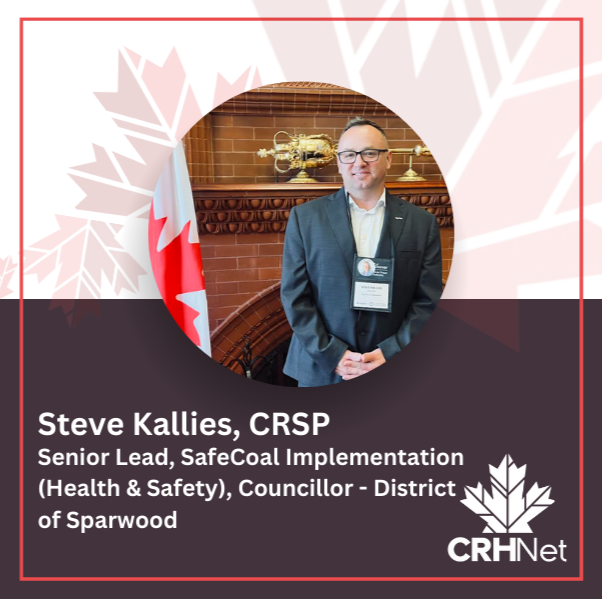
The trajectory of Steve Kallies’s life changed at age 20 when his younger sister and two of her close friends were killed in a tragic car crash. That loss became the defining force that pushed him toward emergency response, community safety, and the kind of work that helps people through the worst moments of their lives. It remains the anchor for his approach to preparedness, leadership, and long-term community resilience.
Steve began his career in the mining industry as a heavy equipment operator, working in the open-pit through his early twenties. He later completed a Powerline Technician apprenticeship and earned his Red Seal in 2011. As his responsibilities grew, he pursued formal education in Occupational Health and Safety through the University of New Brunswick and earned his Canadian Registered Safety Professional designation in 2021. Alongside his industrial experience, Steve expanded his emergency response capability through service on Elkview Mine’s surface and underground Mine Rescue teams, as well as through involvement in municipal firefighting and search and rescue. Those combined experiences led him into emergency management and a Health and Safety supervisor role while also instructing at the College of the Rockies.
He now serves as Senior Lead for Emergency Preparedness and Contractor Compliance with Elk Valley Resources, overseeing regional preparedness and ensuring safe, consistent contractor practices across complex industrial operations. He also serves as an elected Councillor in the District of Sparwood, currently in his first term.
Throughout his work in industry and local government, Steve has identified several recurring systemic challenges that constrain emergency readiness:
- Volunteer retention is increasingly difficult as training requirements grow, and the system must repeatedly rebuild capacity.
- Response standards remain inconsistent across mining, municipal, and provincial agencies, creating avoidable barriers to mutual aid and coordinated operations.
- Emergency management funding remains unstable and reactive, with planning work often sidelined until after a major event.
- Awareness and education gaps persist at local, regional, and provincial levels about the long-term consequences of underinvesting in preparedness.
Steve also identifies a major opportunity in strengthening relationships with First Nations. He emphasizes that cultural safety is not a short-term initiative but a long-term commitment rooted in thousands of years of knowledge. He believes meaningful partnership requires sustained engagement, humility, and a willingness to learn rather than short term targets or transactional approaches.
Looking ahead, Steve remains focused on aligning mine rescue standards with provincial systems to improve interagency collaboration. He is also committed to advancing durable mental health supports for emergency leaders and elected officials, noting that leadership in crisis environments carries a sustained level of stress that is often overlooked. For Steve, effective preparedness depends on consistent standards across agencies, proactive and stable funding, and healthier, better supported people at every level of leadership.
CRHNet EP members who wish to connect with Steve regarding his work or perspectives on emergency preparedness may reach out to communications@crhnet.ca, and the request will be forwarded to him.