Announcements
2026 Special Members Session
[Image Description: A maple leaf with dark red, and coral coloured sections, representing the thirteen provinces and territories. Text reads CRHNet Canadian Risk & Hazards
[Image Description: A maple leaf with dark red, and coral coloured sections, representing the thirteen provinces and territories. Text reads CRHNet Canadian Risk & Hazards

Image Description: Is a white and dark grey background with cascading maple leaves faintly in the background. There is a photo of Jen McEachen with
The Canadian Risk and Hazards Network (CRHNet) and Incident Command System (ICS) Canada are pleased to announce the signature of a Memorandum of Understanding (MOU), effective May 16, 2025.
The Canadian Risk and Hazards Network (CRHNet) invites you to apply for the 2025/26 Emerging Professionals (EP) and Professional Development (PD) Committee. We are looking
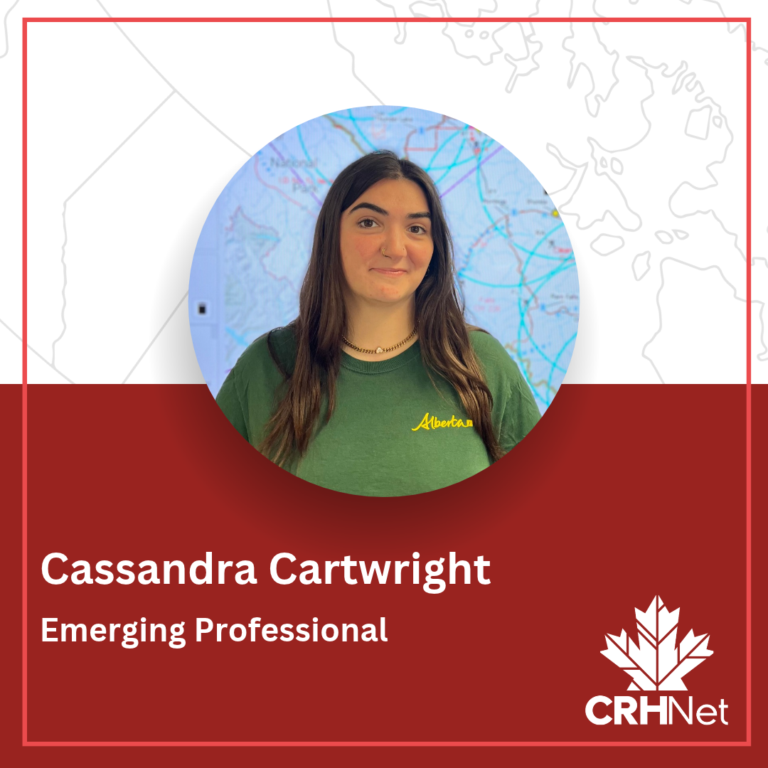
[Image Description: Red and white background, with a faint outline of the map of Canada. There is a photo of Cassie, who is wearing a
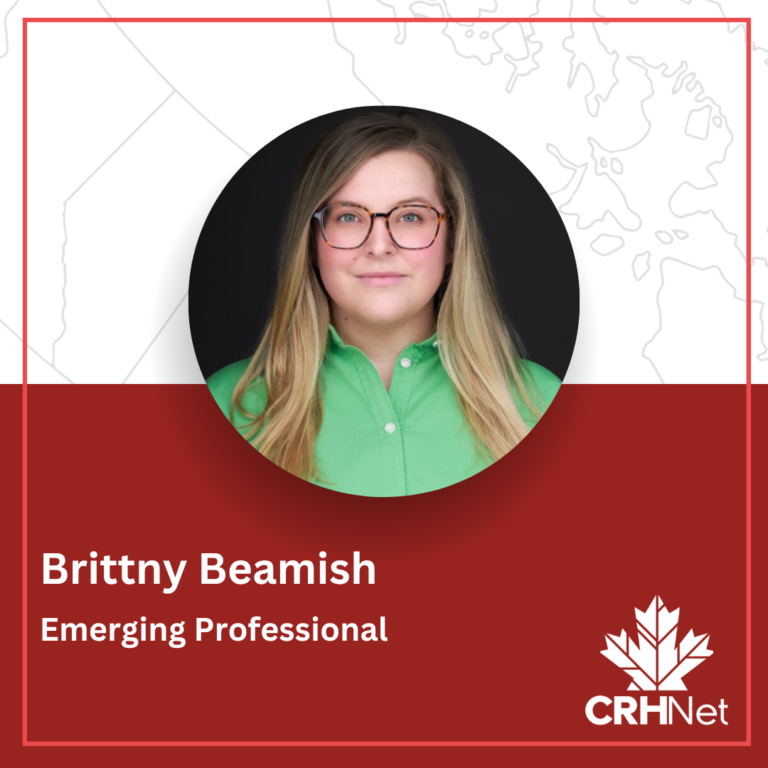
[Image Description: red and white background, with a faint overlay of a map of Canada on the white top half. There is a photo of
[Image Description: red and white background, with a faint overlay of a map of Canada on the white top half. There is a photo of Brittny in the center; she is wearing a mint green shirt, has long blonde hair, glasses, and is smiling into the camera. Text reads: Brittny Beamish Emerging Professional]
Welcome back! We hope everyone had a chance to enjoy the summer, spend some time outside, and take a well deserved break.
As we head into September, we are excited to get things started again by sharing our latest Emerging Professional Spotlight featuring Brittny Beamish.
Brittny is an Environmental Scientist and graduate student in Disaster and Emergency Management. In her spotlight, she shares more about her path into the field, what inspired her interest in emergency management, and some of the experiences that have shaped her work so far.
If you are a student, an emerging professional, or simply interested in learning more about the different paths people take into disaster risk reduction and emergency management, we encourage you to give it a read.
Click the link to read Brittny’s full Emerging Professional Spotlight:
crhnet.ca/emerging-professional-spotlight-brittny-beamish/
We are looking forward to connecting with everyone again this fall and sharing more stories, resources, and opportunities from across the CRHNet community.

1 CommentsComment on Facebook
[Image Description: Grey background with a photo of Blessing in the top right corner with a red background and a CRHNet logo in the top left corner. The text on the graphic is repeated in the following body of text.]
Session Title: Rolling the Dice on Resilience: Advancing Community Understanding of Urban Flood Governance Through Play
This presentation explores how serious games can strengthen community understanding of urban flood governance among minoritised ethnic communities in Hull, UK, and Calgary, Canada. Drawing on the co-developed Just Flood Resilience Coop (JFRC), the presentation demonstrates how complex governance processes, policy trade-offs, and flood resilience challenges can be translated into interactive scenarios that support learning, dialogue, and reflection. Findings show that participants developed a deeper understanding of flood responsibilities, institutional decisionmaking, and the justice dimensions of resilience. The presentation highlights how serious games can enhance risk communication, support more inclusive community engagement, and create opportunities for communities to explore the challenges and choices that shape flood resilience. The findings suggest that serious gaming offers a practical and innovative tool for advancing equitable, community-centred approaches to disaster risk reduction and urban flood governance.
Time: 14:00 EST / 12:00 MST / 15:00 PST
Date: Friday, June 26
For more information and to RSVP visit the link here: crhnet.ca/events/event-calendar/#!event/2026/6/26/crhnet-ep-committee-presents-rolling-the-dice-o...
0 CommentsComment on Facebook
[Image Description: Grey background with a photo of Vanessa Howard in the top right corner, there is a CRHNet logo in the top left corner. All text will be repeated in the main body of text.]
Toward Decolonization of Emergency Management
Vanessa Howard is an Emergency Management Specialist with Health Emergency Management BC whose leadership is grounded in relationships, curiosity, and collaboration. With over 20 years of experience across frontline response and emergency management, she is known for creating environments where people feel safe to share, challenge assumptions, and co-develop solutions. Vanessa’s approach centres on listening deeply, building trust across diverse partners, and working alongside teams and leaders to shape responsive and inclusive emergency management practices. She currently leads a provincial initiative toward a less-colonial emergency management process in BC’s health system, applying a relational lens to systems change and focusing on how we work together to create effective, respectful, and resilient community-centric outcomes.
Join for Vanessa's session as she explores our path toward a community-centric response model supported by agile and responsive health system during emergencies.
Time: 16:00 EST / 14:00 MST / 13:00 P{ST
Date: Wednesday, June 24th.
RSVP here! crhnet.ca/events/event-calendar/#!event/2026/6/24/crhnet-ep-committee-presents-toward-decolonizat...
0 CommentsComment on Facebook
[Image Description: Drawing of people sitting around a table having a discussion, symposium logo is on the left middle side of the graphic, there is a QR code at the bottom that takes you to the session details. There is a teal text box and a coral one below it. Text is repeated in the following post]
Today our symposium guests participated in Disaster Risk Reduction Roundtable: The Future of DRR in Canada (in two parts). The opportunity for meaningful discussions and connections is something that we take great pride in.
The wonderful programs team has done an excellent job at providing opportunities to facilitate conversations!
Tell us what your symposium highlight has been so far! What has made this symposium different than others you have attended?
#crhnet #DisasterRiskReduction #resilience #ClimateResilience #EmergencyManagement #riskreduction #DRR #ClimateAdaptation #KnowledgeExchange #ResilientCommunities #livingthelessons

1 CommentsComment on Facebook
[Image Description: Symposium Highlight, CRHNet AGM. Text: Join us Thursday, May 14th, 13:30 - 14:20 for our in-person AGM. Both the public and members are welcome to join us. This meeting will include the adoption of the CRHNet bylaws, as well as the election of new members of the Executive and Board of Directors.]
The future of disaster risk reduction in Canada depends on strong collaboration, shared learning, and engaged leadership.
Join the Canadian Risk and Hazards Network for the 2026 Annual General Meeting during the 2026 CRHNet Symposium in Edmonton, Alberta. This is an opportunity for members to hear organizational updates, participate in important governance discussions, and help shape the future direction of CRHNet and the disaster risk reduction community across Canada.
As we continue “Living the Lessons: From Impact to Insight,” the AGM is an important space to reflect on the work accomplished over the past year and look ahead to the opportunities and challenges facing the sector.
Learn more: crhnet.ca/events/#!event/2026/5/14/2026-crhnet-annual-general-meeting
#CRHNet #DisasterRiskReduction #DRR #EmergencyManagement #Resilience #ClimateResilience #KnowledgeExchange #LivingTheLessons #CRHnetAGM

0 CommentsComment on Facebook


